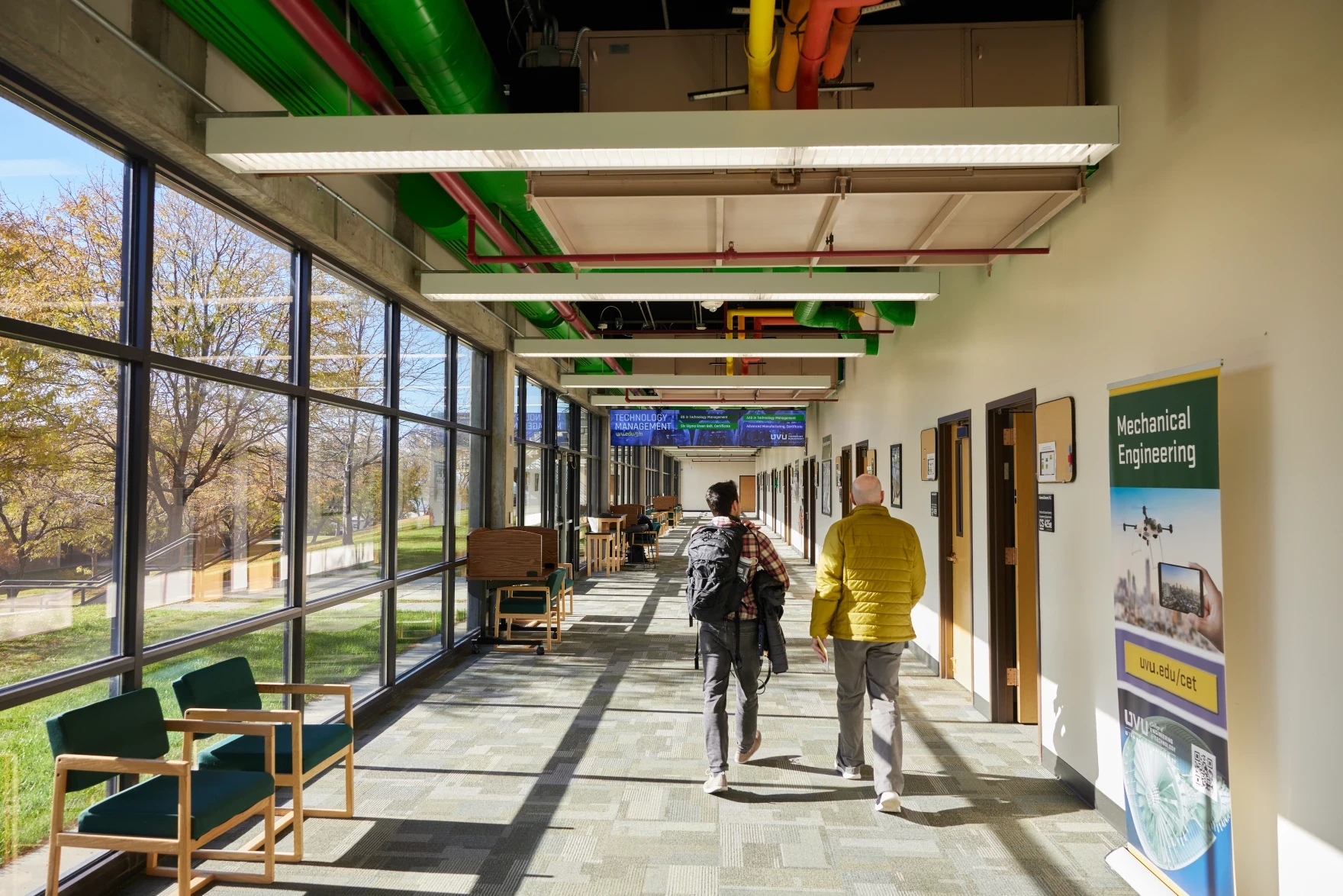
Steven Vargo / for The Hechinger Report
Designing for Serendipity
We utilized the campus's unique indoor loop architecture to address student isolation through a digital-first spatial intervention. I led the development of a consolidated platform that removed the barriers to hosting events, transforming an abandoned hallway into a thriving ecosystem for serendipitous social interaction.
My Role
Team Lead Designer Developer
Timeline
Dec 2022 - Feb 2023
Team
Brian Silva (Prototype Developer), Stella Xu (Project Operations)
Context
Utah Valley University (UVU) is architecturally unique. To protect students from harsh winters, the campus functions as a continuous indoor loop connecting every building. Over 20,000 students walk the same physical path daily, yet student isolation rate was rising. Through a "Design for Impact" competition, our team set out to find the cause of disconnect.
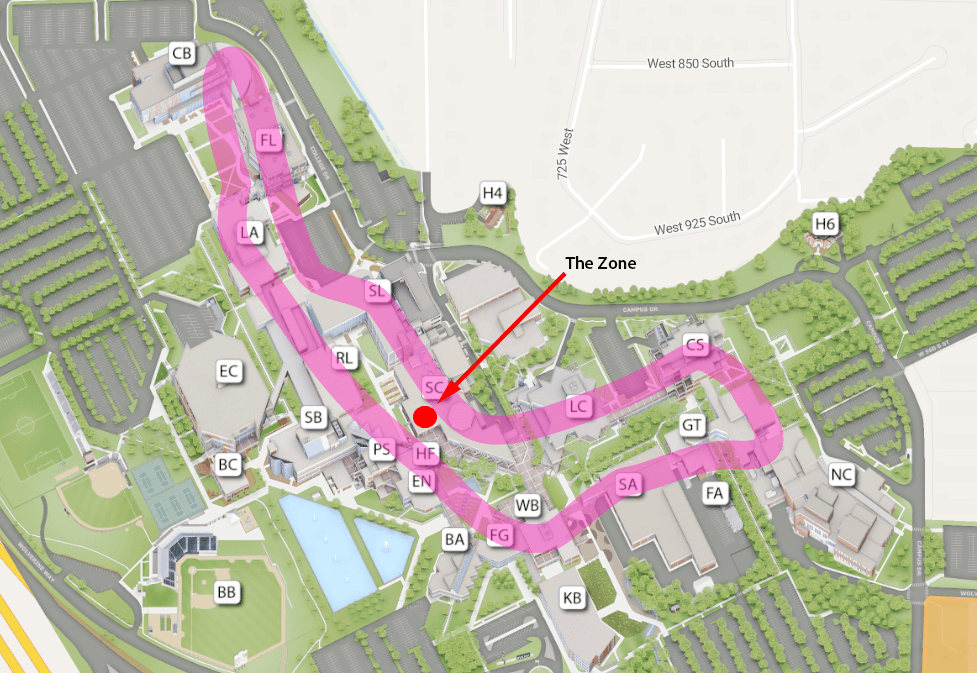
UVU main campus map with loops and "the Zone" highlighted.
The Investigation
We interviewed students, faculty, and the student government (UVUSA) to understand why we were lonely in crowds of 20,000. We found that while student isolation had many roots, the current system amplified the problem by creating significant barriers to connection.
Our commuter culture meant students left campus immediately after class, leaving limited margin for organic socialization. Meanwhile, a rigid 2-month approval timeline requiring complete event information forced clubs into a shadow economy of unadvertised private events. This bureaucracy prevented the frequent, face-to-face interactions necessary for niche groups (LGBTQ+, International) to build trust with more reserved or intimidated students.
The Intervention
Digital Infrastructure
To break the 2-month bottleneck, we built a flexible event management system that accepted incomplete registrations (e.g., locking a date without a finalized location). This replaced the static quarterly schedule with a real-time, rolling calendar that legitimized shadow events.
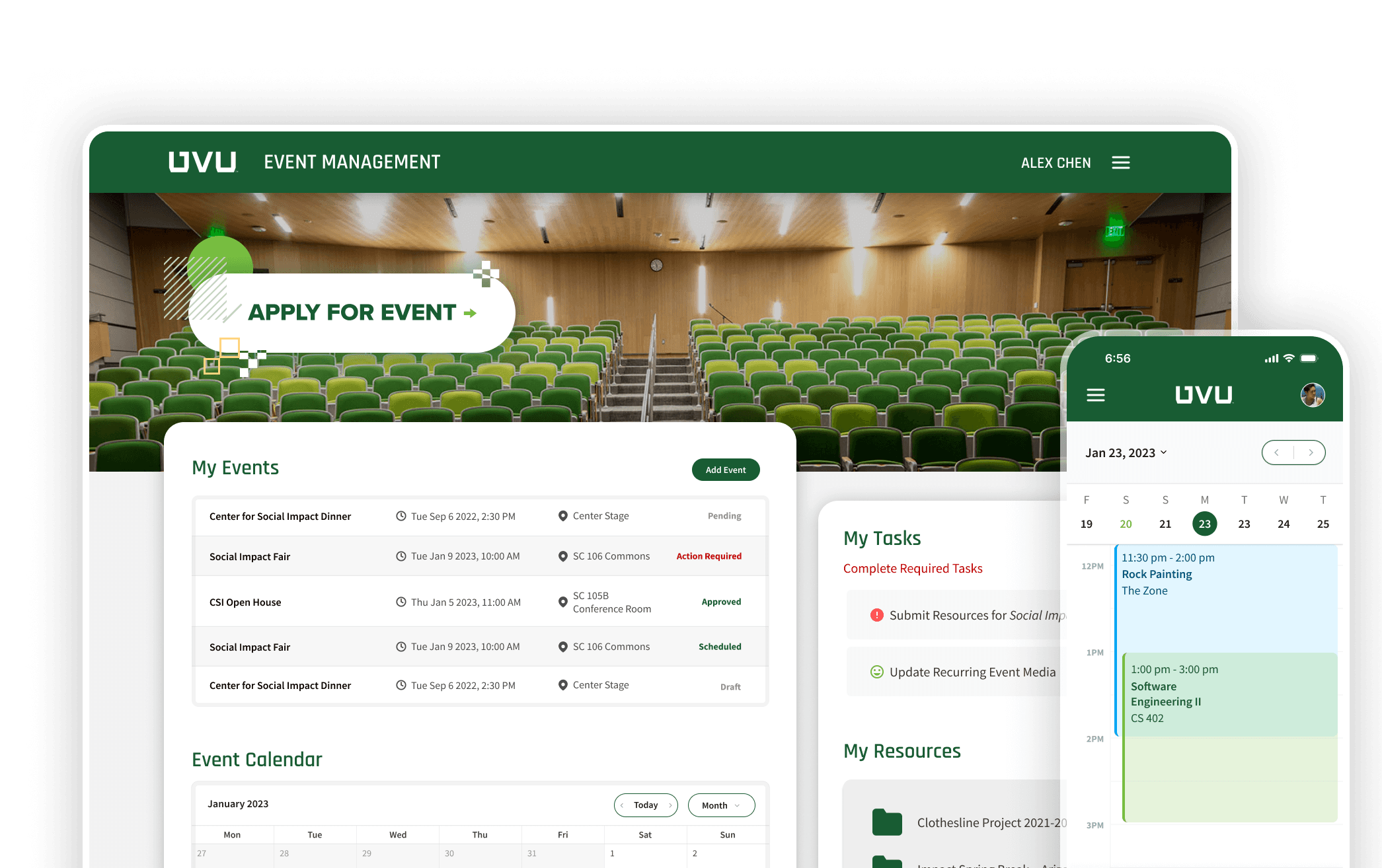
The consolidated event management system from a student/organizer view.
Physical Experience
Since students wouldn't stay after class, we targeted "The Zone"—a space that laid dormant for two years since the pandemic, located at the choke point of the campus loop. We brought the community to intercept student commute.
Pre-COVID, the space was used bi-weekly. We shifted this to daily programming. By ensuring there was always something happening (crafts, open mics, showcases), we transformed "The Zone" from a special occasion destination into a reliable third place for students to drift into between classes.
Video of an event facilitator sharing his experience with "the Zone".
Impact
System Reform
UVUSA acknowledged the gap and funded a complete revamp of the official event system (adopting a vendor solution based on our workflow findings).
Physical Revival
"The Zone" was permanently revived with daily low stakes events. Sara Groesbeck, the Club Ambassador we collaborated with, was hired as the full-time Program Director for The Zone. The initiative has since expanded to two additional high-traffic locations and a mobile "Cereal Cart."
Future Vision
The next phase would be to aim for deep collaboration. I envision opening the space to cross-disciplinary academic programs, allowing students to bond over shared projects rather than just passive leisure. This would shift the dynamic from transient interaction to long-term relationship building that can more deeply address isolation.
